Cauliflower is a cool-season vegetable grown for its dense white heads and nutritious florets.Popular varieties for growing cauliflower in home gardens include Snowball, Early White Hybrid, Amazing, Purple of Sicily, and Cheddar.
Cauliflower thrives in USDA hardiness zones 2 through 11 when planted during appropriate seasons, performing best in cool spring and fall weather. This member of the brassica family, Brassicaceae, is scientifically known as Brassica oleracea var. botrytis.
Native to the Mediterranean region, cauliflower has been cultivated for centuries and now grows successfully in temperate climates worldwide.
Home gardeners grow cauliflower for its versatile culinary applications and impressive nutritional profile. The dense heads work well raw in salads, roasted, steamed, riced as a low-carb alternative, or pickled for preservation.
Cauliflower provides substantial amounts of vitamin C, vitamin K, fiber, and various antioxidants. In the garden, cauliflower serves as a productive cool-season crop that fills the gap between summer and winter harvests.

Cauliflower grows as an annual, completing its lifecycle in one growing season. The plant performs best during cool weather when daytime temperatures range between 60 and 70 degrees Fahrenheit.
Cauliflower requires full sun, consistent moisture, and fertile soil rich in organic matter. The crop tolerates light frosts and actually develops better flavor when grown in cooler conditions. Hot weather causes premature bolting and poor head formation.
Understanding Growing Cauliflower Plant Characteristics
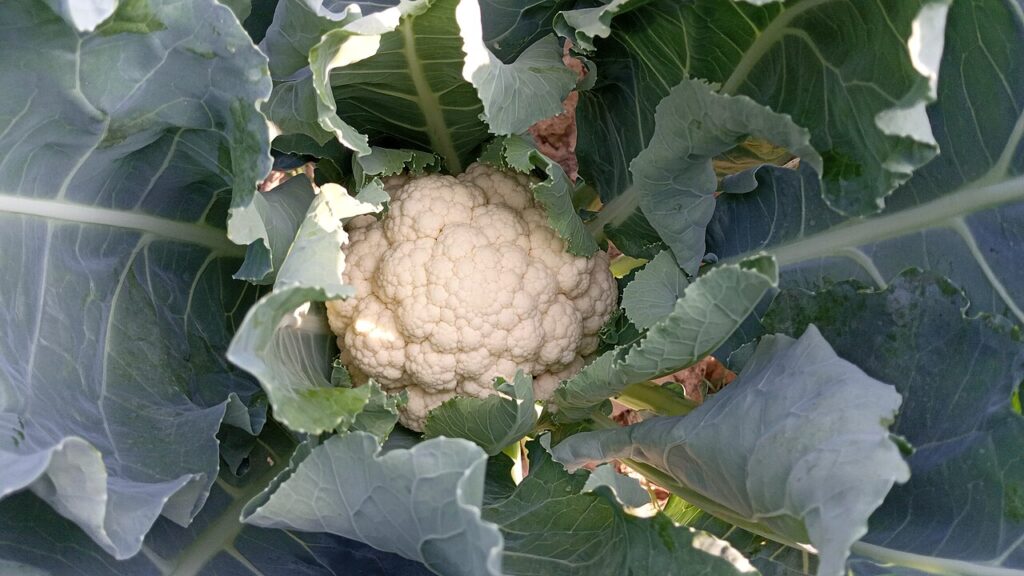
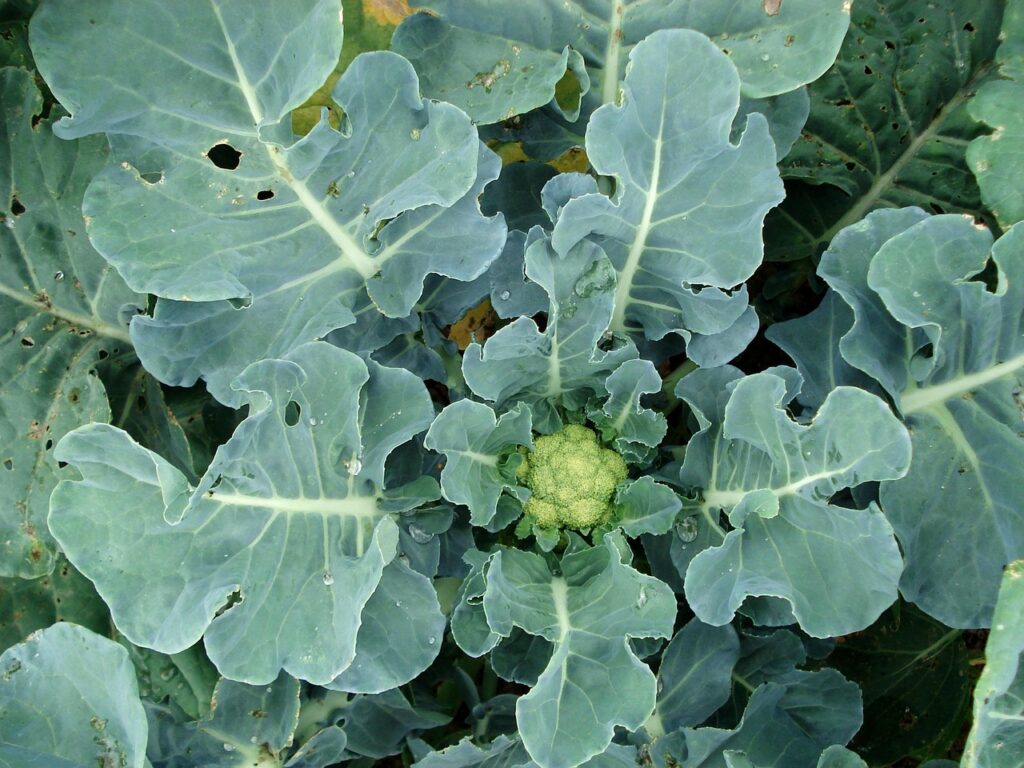
Cauliflower grows 18 to 24 inches tall and spreads 24 to 30 inches wide at maturity. The plant develops a compact, upright growth habit with a central stem. Large, blue-green leaves with thick midribs form a rosette around the developing head.
The leaves are broad and wavy with prominent veining. Foliage radiates outward from the center, creating a protective canopy over the head.
The edible portion of cauliflower is the immature flower head, also called the curd. This dense, white mass of tightly packed flower buds forms at the center of the plant.
The curd develops beneath the protective leaves and should be harvested before individual florets begin to separate and open. While the leaves are technically edible, most gardeners focus on harvesting the tender, creamy white head.
The curd appears as a compact dome rising from the center of the leaf rosette.
Key Requirements for Growing Cauliflower
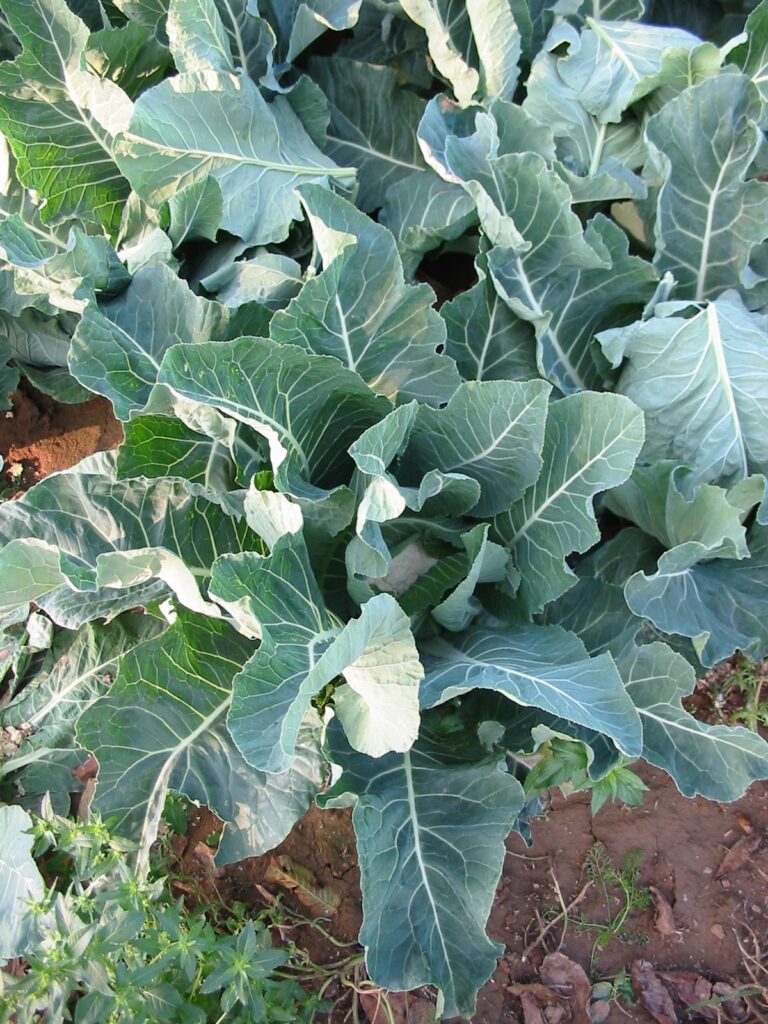
Cauliflower requires specific conditions to produce quality heads. Understanding the plant’s basic requirements helps ensure successful cultivation and good harvests.
- Lifespan: Annual
- Growing season: Cool season, spring, and fall
- Mature height: 18-24 inches
- Mature spread: 24-30 inches
- Light: Full sun, 6-8 hours daily
- Water: 1-1.5 inches per week
- Soil: Rich, well-draining, pH 6.0-7.0
- Feeding: Heavy feeder, needs regular nitrogen
Timing Your Cauliflower Planting for Success
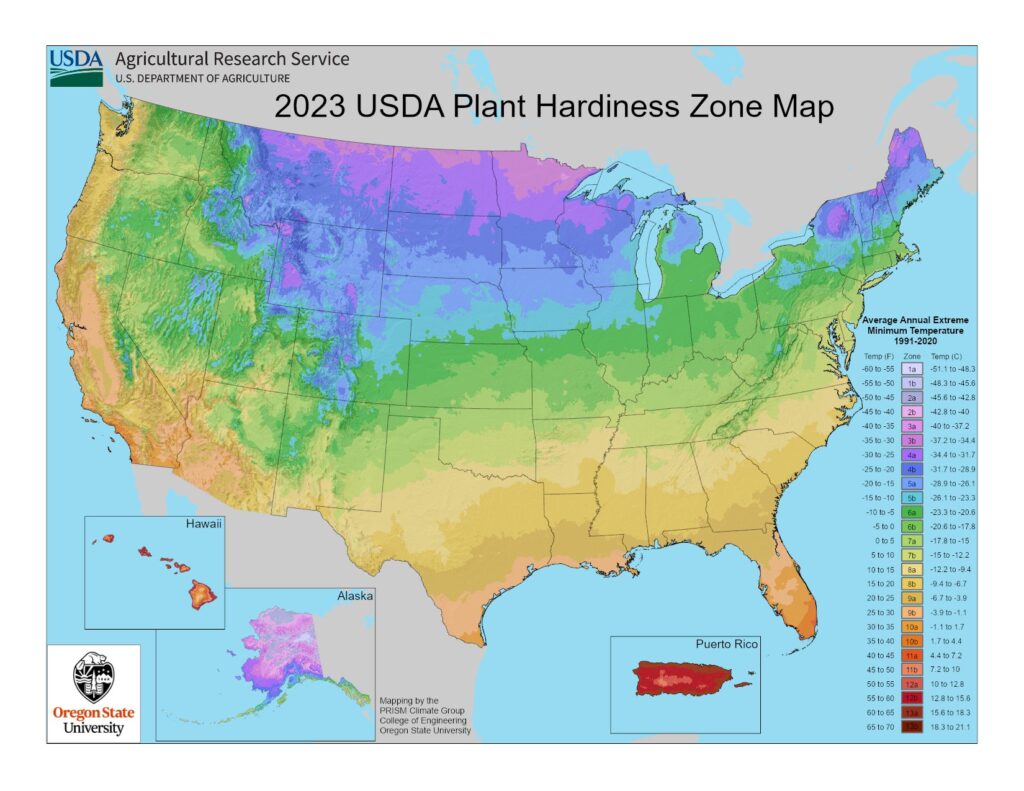
Cauliflower seeds can be started indoors for transplanting or sown directly into the garden. Timing varies across climate zones based on frost dates and temperature patterns. Proper timing ensures plants mature during cool weather for best head development.
Zones 3-5:
Start cauliflower seeds indoors 4 to 6 weeks before the last expected spring frost for spring crops. Direct sow seeds outdoors 2 to 4 weeks before the last frost date when soil can be worked.
For fall crops, start seeds indoors in mid to late June or direct sow in early to mid July, timing harvest for 2 to 3 weeks before the first fall frost.
Zones 6-8:
Start cauliflower seeds indoors in late January through February for spring crops. Direct sow seeds outdoors in late February through March.
For fall crops, start seeds indoors in late June through July or direct sow in late July through early August. In zone 8, gardeners can also plant in late summer for winter harvest.
Zones 9-12:
Start cauliflower seeds indoors in late summer for fall planting. Direct sow seeds outdoors from September through February, treating cauliflower as a fall, winter, and early spring crop.
In these warm zones, avoid planting during hot summer months. Focus plantings from October through January for best results.
Preparing the Garden Bed for Growing Cauliflower
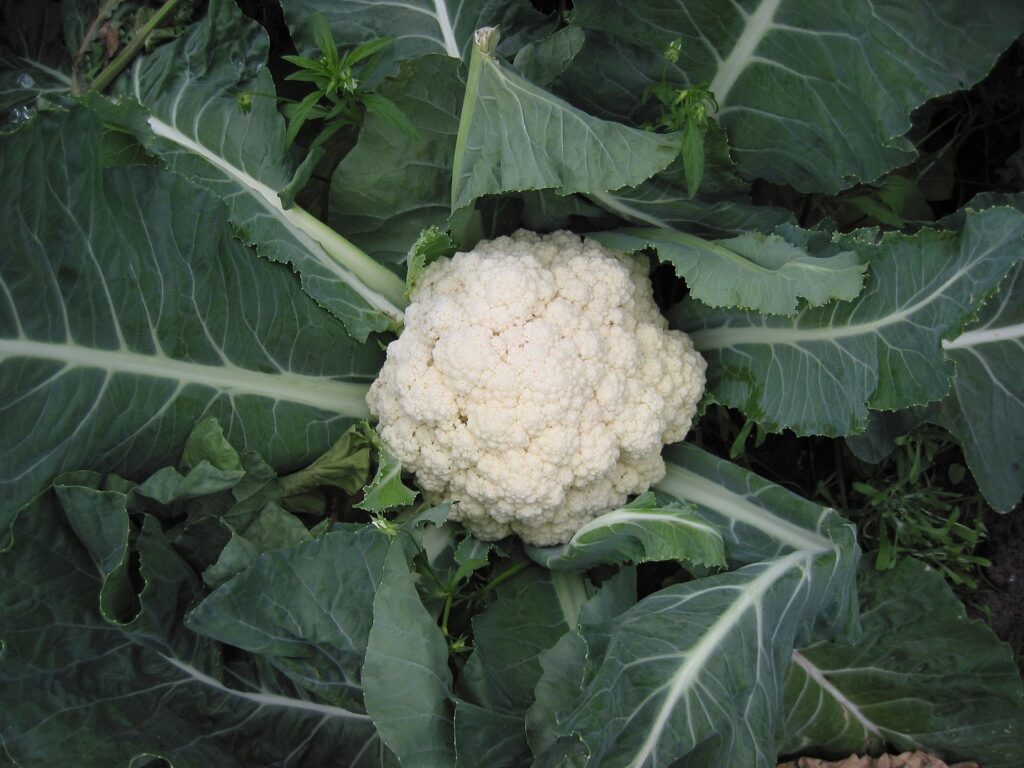
Proper site selection and soil preparation are essential for growing cauliflower successfully. The plant requires specific conditions to develop quality heads.
Choosing a Location
Select a garden bed with full sun exposure and protection from strong winds. Choose an area where brassicas have not grown in the past 2 to 3 years to reduce disease and pest pressure.
Avoid low-lying spots where cold air settles or water pools. Good air circulation helps prevent fungal diseases.
Light Requirements
Cauliflower requires full sun for optimal growth and head development. Provide at least 6 to 8 hours of direct sunlight daily. Insufficient light results in small heads and weak plants. In very hot climates, light afternoon shade may help prevent heat stress during warm spells.
Moisture
Cauliflower needs consistently moist soil throughout the growing season. Choose a location where you can water regularly and deeply.
The site should drain well enough to prevent waterlogging while retaining adequate moisture. Uneven watering causes buttoning, where small premature heads form.
Space Requirements
Allow adequate space for cauliflower plants to reach full size without crowding. Plan for 24 to 30 inches between plants in all directions.
Proper spacing ensures good air circulation and reduces disease problems. Crowded plants compete for nutrients and produce smaller heads.
Soil Type
Cauliflower thrives in rich, well-draining soil with high organic matter content. Work 3 to 4 inches of compost or aged manure into the top 8 to 10 inches of soil before planting. The ideal soil pH ranges from 6.0 to 7.0.
Test soil and adjust pH if needed using lime to raise or sulfur to lower. Cauliflower is a heavy feeder and benefits from nutrient-rich soil.
Direct Sowing Cauliflower Seeds in the Garden
Prepare the soil by raking it smooth and removing debris. Create shallow furrows half an inch deep. Space rows 24 to 30 inches apart.
Sow cauliflower seeds half an inch deep and 2 to 3 inches apart along the furrow. Cover with half an inch of soil and firm gently.
Water immediately after planting using a gentle spray. Keep the soil consistently moist until seedlings emerge. Water lightly once or twice daily in dry weather.
Cauliflower seeds germinate best when soil temperatures range from 60 to 75 degrees Fahrenheit. Optimal germination occurs at 70 degrees Fahrenheit.
Cauliflower seeds do not need light to germinate. They sprout while covered with soil.
Expect seedlings to emerge in 7 to 10 days. Thin seedlings to 18 to 24 inches apart once they develop 2 to 3 true leaves.
Starting Cauliflower Seeds Indoors for Transplanting
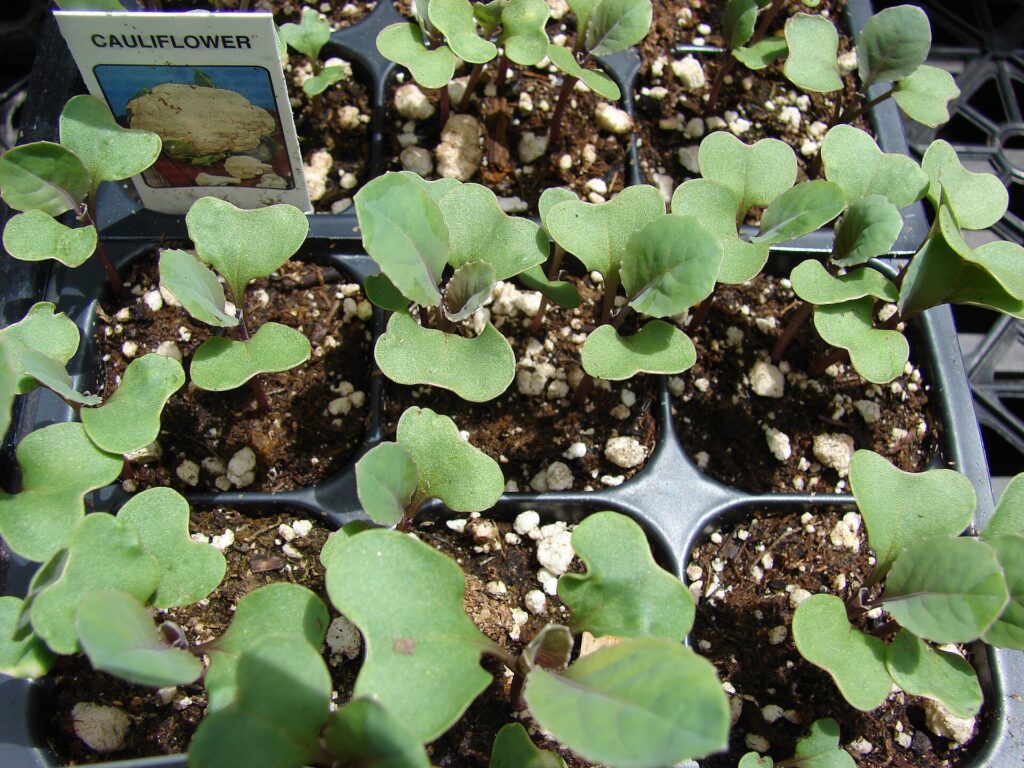
Cauliflower starts successfully indoors and benefits from the controlled environment. Indoor starting provides stronger transplants and earlier harvests.
Use a lightweight seed starting mix. Purchase commercial seed starting mix or combine equal parts peat moss or coco coir, vermiculite, and perlite. Avoid garden soil.
Choose containers with drainage holes. Cell trays with 2 to 3 inch cells work well. Soil blocks also provide good results. Avoid containers smaller than 2 inches.
Fill containers with moistened seed starting mix. Plant seeds half an inch deep. Place one or two seeds per cell.
Water gently after planting. Keep the mix consistently moist but not waterlogged. Bottom watering prevents disturbing seeds. Check moisture daily.
Maintain temperatures between 60 and 75 degrees Fahrenheit for best germination. Use a heat mat if needed to maintain consistent warmth.
Cauliflower seeds do not require light to germinate. Move seedlings to bright light immediately after emergence. Provide 14 to 16 hours of light daily.
Expect seedlings to emerge in 5 to 10 days. Thin to one seedling per cell once they develop their first true leaves.
When to Plant Out Cauliflower for Best Results
Cauliflower seedlings are ready to transplant when they have 4 to 6 true leaves and stand 4 to 6 inches tall. This typically occurs 4 to 6 weeks after germination.
Transplant in early spring 2 to 4 weeks before the last frost date or in mid to late summer for fall crops. Choose a cloudy day or transplant in the evening to reduce stress.
Hardening Off Cauliflower Plants
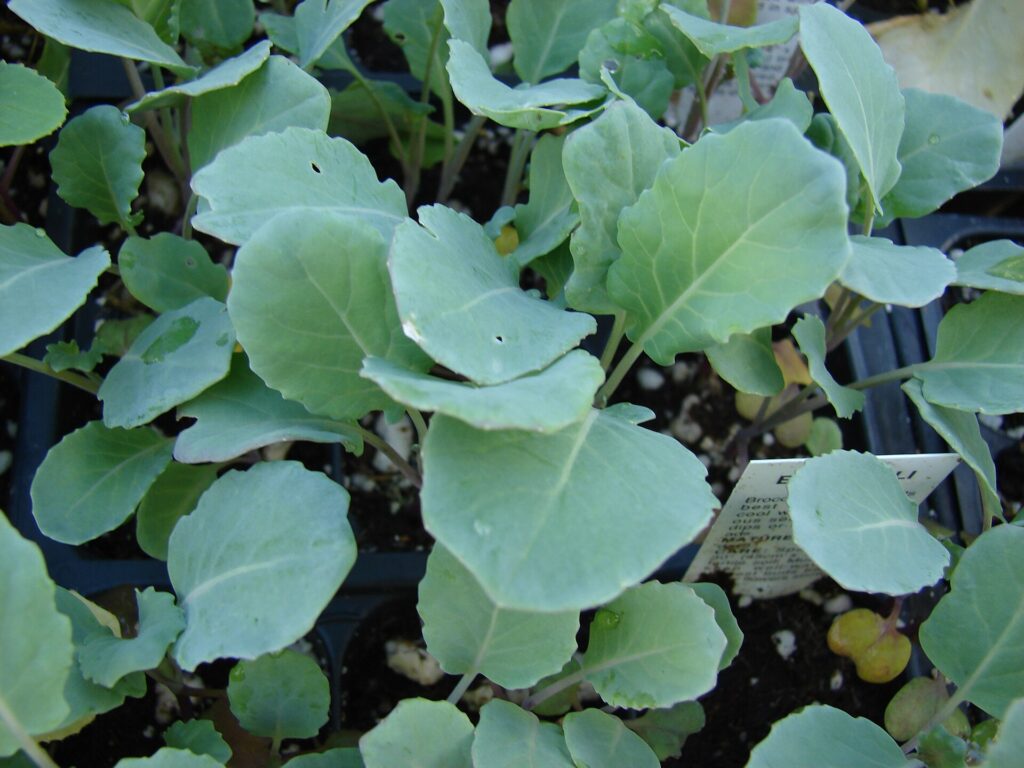
Begin hardening off cauliflower seedlings 7 to 10 days before transplanting. Place seedlings outdoors in a sheltered, shaded location for 1 to 2 hours on the first day. Protect from strong wind and direct sun initially.
Gradually increase outdoor exposure by 1 to 2 hours each day. Move plants into partial sun after 3 to 4 days of shade exposure. Continue increasing time outdoors daily.
By day 7, seedlings should remain outside all day and night if temperatures stay above 40 degrees Fahrenheit. Reduce watering slightly during hardening off but do not let plants wilt.
Bring seedlings indoors if temperatures drop below 35 degrees Fahrenheit or if harsh weather threatens. Resume hardening once conditions improve.
Planting Out Cauliflower in the Garden
Dig holes slightly deeper than the root ball of each seedling. Space holes 18 to 24 inches apart in rows set 24 to 30 inches apart.
Remove seedlings carefully from containers. Gently loosen any circling roots. Place each seedling in its hole so the base of the stem sits at the same depth it grew in the container. Fill around roots with soil and firm gently.
Apply a 2 to 3 inch layer of organic mulch around plants. Keep mulch pulled back 2 to 3 inches from stems. Straw, shredded leaves, or compost work well. Mulch retains moisture and regulates soil temperature.
Water thoroughly immediately after planting. Provide enough water to moisten soil 6 to 8 inches deep. Water daily for the first week if rainfall is insufficient. After establishment, water deeply when the top inch of soil feels dry.
Caring for Growing Cauliflower Plants
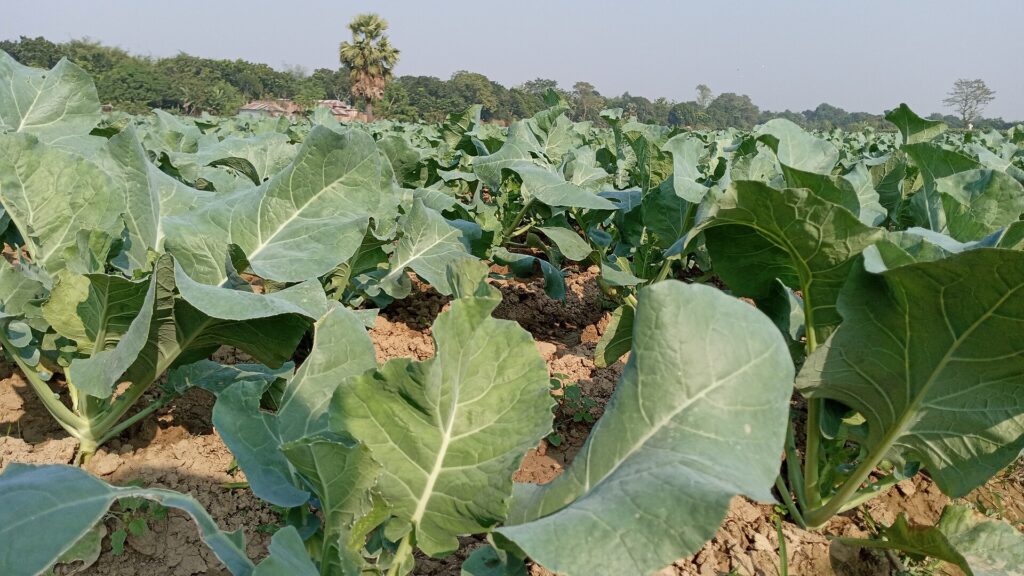
Regular maintenance ensures healthy plants and quality head development. Cauliflower requires consistent care throughout the growing season.
Watering
Water cauliflower consistently to maintain evenly moist soil. Provide 1 to 1.5 inches of water per week through rainfall or irrigation. Water deeply to encourage strong root development. Check soil moisture by inserting your finger 2 inches into the soil. Water when the top inch feels dry. Inconsistent watering causes buttoning, cracking, or bitter flavor. Water at the base of plants rather than overhead to reduce disease risk.
Feeding
Feed cauliflower regularly as a heavy feeder requiring substantial nutrients. Side-dress plants with compost or balanced fertilizer 3 weeks after transplanting. Apply nitrogen-rich fertilizer again when heads begin to form. Use fish emulsion, blood meal, or a complete vegetable fertilizer according to package directions. Yellowing leaves indicate nitrogen deficiency.
- Feed every 3 to 4 weeks during active growth
- Use nitrogen-rich fertilizer for leafy growth
- Switch to balanced fertilizer when heads form
- Avoid over-fertilizing which causes loose heads
Weeding
Keep the area around cauliflower plants free of weeds. Weeds compete for nutrients, water, and light. Hand-pull weeds carefully to avoid disturbing shallow roots. Mulch suppresses weed growth significantly. Remove weeds when small before they become established. Cultivate shallowly around plants to avoid root damage.
Pest Control
Monitor cauliflower regularly for common brassica pests. Cover plants with floating row covers immediately after transplanting to exclude cabbage moths, flea beetles, and other flying pests. Check undersides of leaves weekly for imported cabbageworm eggs and larvae. Hand-pick caterpillars or spray with Bt (Bacillus thuringiensis). Watch for aphids on new growth and remove with a strong water spray.
- Use row covers to prevent cabbage moths from laying eggs
- Hand-pick cabbage worms and cabbage loopers
- Spray Bt for caterpillar control
- Remove aphids with water or insecticidal soap
- Check for cabbage root maggots at soil level
- Rotate crops yearly to reduce soil-borne pests
Tips and Tricks for Growing Cauliflower Successfully
Cauliflower requires specific techniques to produce the white, tender heads gardeners expect. Understanding these practices helps prevent common problems and improves harvest quality.
Blanching Growing Cauliflower
Blanching cauliflower heads protects them from sunlight and maintains white color.
When heads reach 2 to 3 inches in diameter, gather the outer leaves up and over the developing head. Secure leaves loosely with twine, rubber bands, or clothespins. Self-blanching varieties have leaves that naturally curl over heads.
Check blanched heads every few days as they mature quickly once covered. Purple and orange varieties do not require blanching.
Keep Growing Cauliflower Moist
Water cauliflower consistently throughout the growing season to prevent stress. Uneven moisture causes heads to crack, button prematurely, or develop ricey texture. Maintain steady soil moisture with deep watering and mulch. Drip irrigation works well for cauliflower.
Plant cauliflower at the right time for your zone. The crop needs 55 to 100 days of cool weather to mature properly. Temperatures above 80 degrees Fahrenheit cause poor head formation and early bolting. Time plantings so heads develop when temperatures stay between 60 and 70 degrees Fahrenheit.
Choose heat-tolerant varieties for warmer climates or late spring plantings. Varieties like Snow Crown and Amazing handle temperature fluctuations better than older types. Fast-maturing varieties work well for short cool seasons.
Check soil pH before planting cauliflower. The crop prefers slightly acidic to neutral soil with pH 6.0 to 7.0. Add lime several weeks before planting if pH falls below 6.0. Low pH increases risk of clubroot disease.
Harvesting Cauliflower from Your Garden
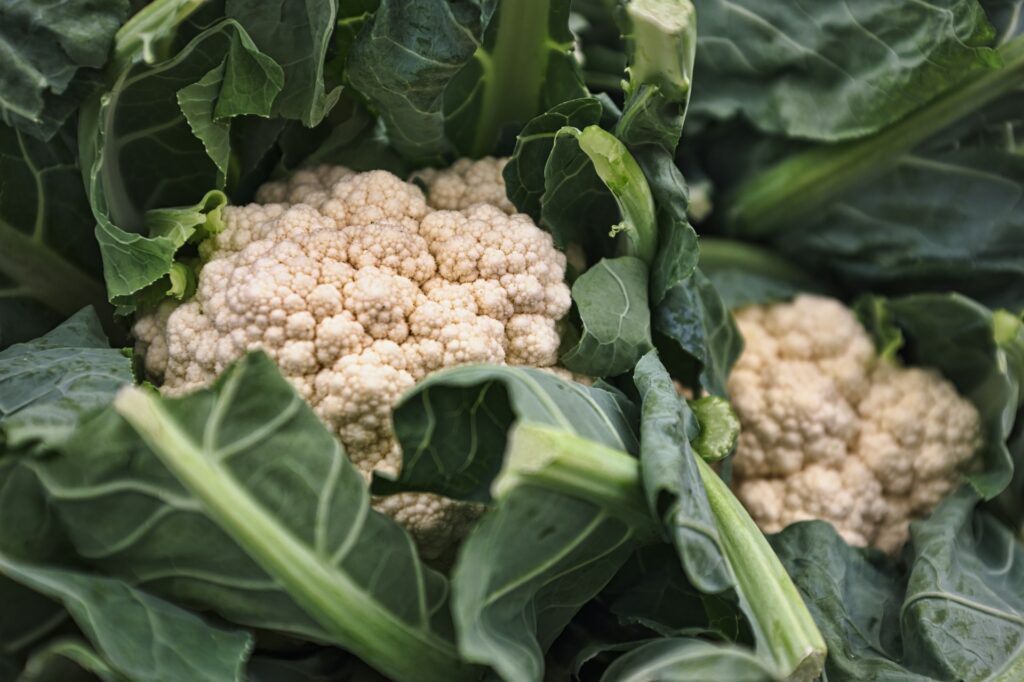
Cauliflower reaches harvest maturity when heads are full, tight, and firm. Proper timing and handling preserve quality and flavor for fresh use or storage.
When to Harvest Cauliflower
Harvest cauliflower when heads reach 6 to 8 inches in diameter and remain tightly compact. The curds should be smooth and creamy white with no separation between florets.
Most varieties mature 55 to 100 days after transplanting depending on the cultivar. Check heads daily once they begin forming as they can go from perfect to overripe quickly.
Harvest in the morning after dew dries for best quality. Cut heads with a sharp knife, leaving 2 to 3 inches of stem attached and several wrapper leaves for protection.
Overripe heads can develop a ricey texture, separate into individual florets, and turn yellow or brown.
How to Clean and Prepare Cauliflower
Rinse harvested cauliflower heads under cool running water to remove soil and debris. Soak heads in saltwater for 10 to 15 minutes to flush out any hidden insects. Drain well and pat dry.
Remove outer leaves and trim the stem flush with the base of the head. Break or cut the head into individual florets for cooking. Store whole heads if not using immediately.
How to Store Cauliflower
Store fresh cauliflower in the refrigerator wrapped loosely in plastic or placed in a perforated plastic bag. Refrigerate for 5 to 7 days for best quality.
For longer storage, blanch florets in boiling water for 3 minutes, cool quickly in ice water, drain thoroughly, and freeze in airtight containers. Frozen cauliflower keeps for 10 to 12 months.
Cauliflower can also be pickled for long-term storage.
Cooking with Cauliflower in Your Kitchen
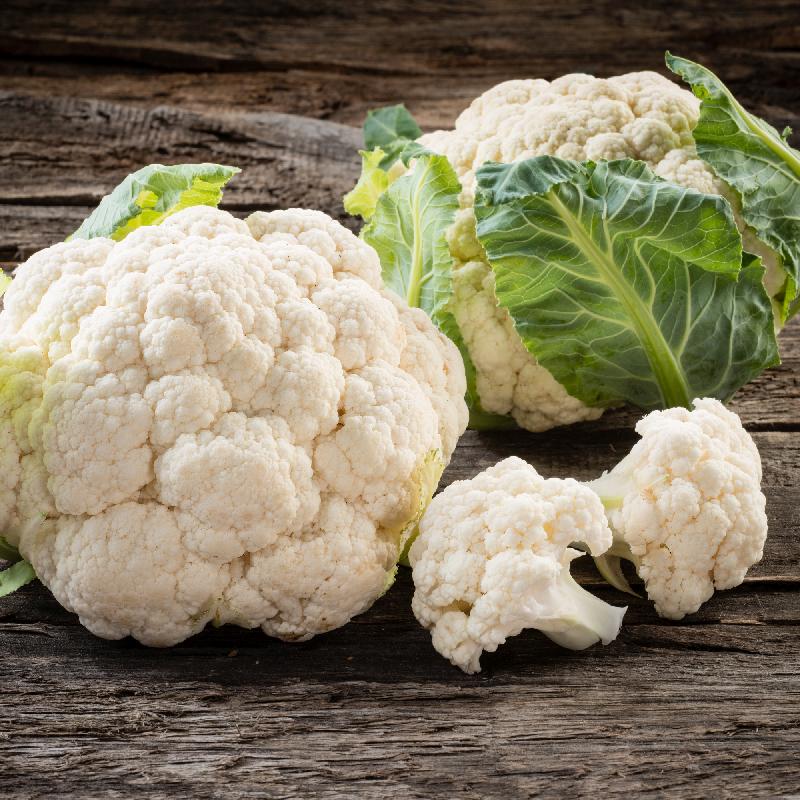
Cauliflower offers exceptional versatility in the kitchen both raw and cooked. The mild flavor and firm texture adapt well to various cooking methods and cuisines.
Fresh Cauliflower
Fresh cauliflower adds crunch and nutrition to raw preparations. Cut florets into bite-sized pieces for vegetable platters served with dips and dressings.
- Chop raw cauliflower finely to make cauliflower rice as a low-carb grain substitute.
- Slice florets thinly for fresh salads or coleslaw.
- Add raw cauliflower to crudité arrangements.
- Pickle cauliflower florets with vinegar, spices, and herbs for tangy refrigerator pickles.
- Blend raw cauliflower into smoothies for added nutrition without strong flavor.
Cooked Cauliflower
Cooked cauliflower transforms into countless dishes across cooking methods.
- Steam or boil florets until tender for simple side dishes.
- Roast cauliflower with olive oil and spices until golden and caramelized.
- Mash cooked cauliflower as a substitute for mashed potatoes.
- Puree steamed cauliflower into creamy soups.
- Add cauliflower to stir-fries, curries, and pasta dishes.
- Bread and fry florets for cauliflower wings or fritters.
- Grate and bake cauliflower into pizza crusts.
- Toss roasted cauliflower with cheese sauce for cauliflower gratin.
- Steam and puree for baby food.
- Air fry seasoned florets for a crispy snack.
Preserving Cauliflower for Long-Term Storage
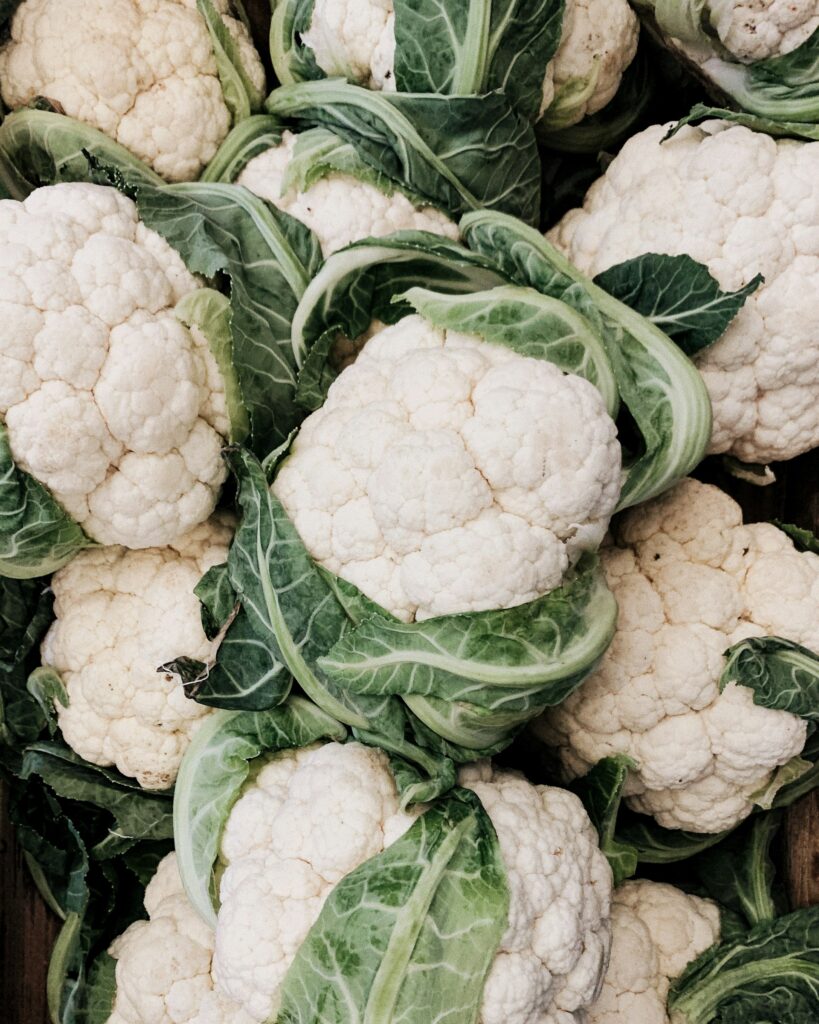
Cauliflower preserves well using several methods that maintain quality and nutrition. Proper preservation techniques extend the harvest for year-round enjoyment.
- Freezing: Blanch florets in boiling water for 3 minutes, cool in ice water, drain thoroughly, and freeze in airtight containers or freezer bags for 10 to 12 months
- Pickling: Pack raw or briefly blanched florets in jars with vinegar brine, spices, and herbs for refrigerator pickles or process in a water bath canner for shelf-stable pickles
- Dehydrating: Blanch florets briefly, drain well, and dehydrate at 125 degrees Fahrenheit until brittle, then store in airtight containers for soups and stews
- Fermenting: Ferment cauliflower florets with salt brine to create probiotic-rich preserved vegetables similar to sauerkraut
- Pressure canning: Process blanched cauliflower florets in a pressure canner following USDA guidelines for low-acid vegetables
Collecting Cauliflower Seeds for Replanting
Cauliflower produces seeds in its second year of growth, making seed saving challenging in most climates. The plant must overwinter and bolt to flower the following season. In cold climates, this requires protection or growing cauliflower as a biennial in mild winter areas.
Select the healthiest, most vigorous plants with the best head quality for seed saving. Leave heads on plants past harvest maturity. The head will eventually open and send up a tall flowering stalk.
Yellow flowers appear on branching stems and attract pollinators. Note that cauliflower cross-pollinates readily with other brassicas including broccoli, kale, and cabbage. Isolate seed plants by at least half a mile from other flowering brassicas or use row covers to prevent cross-pollination.
Allow flowers to mature and form long, narrow seed pods called siliques. The pods turn from green to tan or brown as they ripen. Seeds are ready to harvest when pods are completely dry and brittle, typically 4 to 6 weeks after flowering ends.
Cut entire seed stalks and place them in a paper bag. Hang the bag in a warm, dry location with good air circulation for 2 to 3 weeks.
Shake the bag vigorously to release seeds from dried pods. Remove plant debris and separate seeds from chaff. Cauliflower seeds are small, round, and dark brown to black when mature.
Store cleaned seeds in paper envelopes or small glass jars. Label containers with variety name and collection date. Keep seeds in a cool, dry, dark location.
Cauliflower seeds remain viable for 4 to 5 years when properly stored.
Successfully Growing Cauliflower in Your Garden
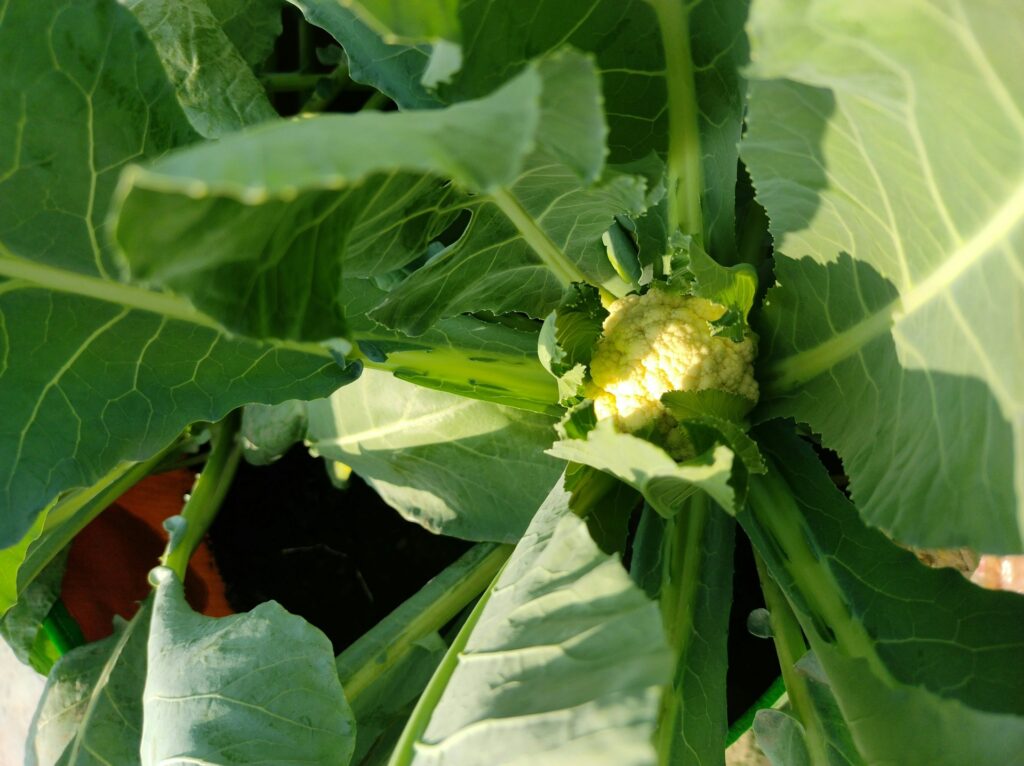
Cauliflower rewards home gardeners with impressive nutritious heads when grown during cool seasons with consistent care. This versatile brassica thrives in spring and fall gardens across most climate zones, providing fresh harvests for countless culinary applications.
With proper timing, rich soil, adequate spacing, and regular watering, cauliflower produces tender white heads packed with vitamins and flavor. The crop requires attention to detail but delivers satisfying results for gardeners willing to meet its needs.
Start your cauliflower seeds this season and experience the satisfaction of harvesting homegrown heads from your garden. Whether you plant a few transplants for fresh eating or dedicate a full bed to succession plantings, cauliflower provides productive cool-season harvests that fill your kitchen with healthy vegetables.
Get your seeds started now and discover why generations of gardeners have made cauliflower a staple in their vegetable gardens.